what did it take to ratify the constitution

16c. The Ratification Procedure: Land past Country
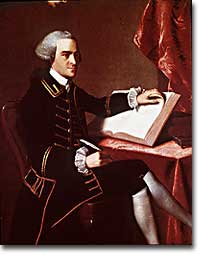
The man behind the signature: This portrait of John Hancock was painted past John Singleton Copley.
The ratification procedure started when the Congress turned the Constitution over to the state legislatures for consideration through specially elected country conventions of the people. Five state conventions voted to corroborate the Constitution almost immediately (December 1787 to January 1788) and in all of them the vote was unanimous (Delaware, New Bailiwick of jersey, Georgia) or lopsided (Pennsylvania, Connecticut). Conspicuously, the well-organized Federalists began the competition in potent shape as they quickly secured v of the nine states needed to make the Constitution law. The Constitution seemed to have easy, broad, and popular support.
However, a closer wait at who ratified the Constitution in these early on states and how information technology was done indicates that the contest was much closer than might announced at outset glance. Four of the five states to kickoff ratify were small states that stood to do good from a strong national regime that could restrain abuses by their larger neighbors.
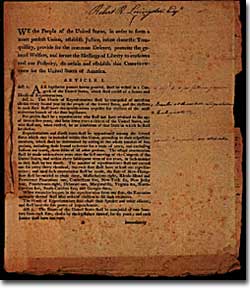
This copy of the Constitution was used by delegates to the New York ratification convention.
The procedure in Pennsylvania, the one large early ratifier, was nix less than corrupt. The Pennsylvania state assembly was about to have its term come to an finish, and had begun to consider calling a special convention on the Constitution, even before Congress had forwarded it to the states. Antifederalists in the state assembly tried to cake this movement by refusing to attend the final ii days of the session, since without them at that place would non be enough members nowadays for the country legislature to make a binding legal decision. As a result extraordinarily coercive measures were taken to force Antifederalists to attend. Antifederalists were found at their boarding firm and and then dragged through the streets of Philadelphia and deposited in the Pennsylvania State Firm with the doors locked behind them. The presence of these Antifederalists confronting their will, created the required number of members to allow a special convention to exist called in the state, which eventually voted 46 to 23 to accept the Constitution.

The first real test of the Constitution in an influential land with both sides prepared for the contest came in Massachusetts in January 1788. Hither influential older Patriots like Governor John Hancock and Sam Adams led the Antifederalists. Further, the rural western office of the state, where Shays' Rebellion had occurred the previous year, was an Antifederalist stronghold. A bitterly divided month-long debate ensued that ended with a close vote (187-168) in favor of the Constitution. Crucial to this narrow victory was the strong back up of artisans who favored the new commercial powers of the proposed central government that might raise tariffs (taxes) on cheap British imports that threatened their livelihood. The Federalists' narrow victory in Massachusetts rested on a cantankerous-class alliance between aristocracy nationalists and urban workingmen.
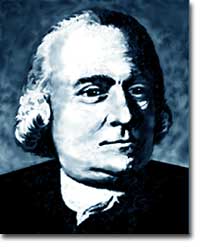
A revolutionary leader in Massachusetts, Samuel Adams founded Bowdoin College when he was governor of Massachusetts. At the fourth dimension, Maine (where Bowdoin College is located) was part of Massachusetts.
The Massachusetts vote also included an innovation with broad significance. John Hancock who shifted his initial opposition to the Constitution led the move toward ratification. Satisfied that sure amendments protecting individual rights were going to be considered by the first new Congress that would meet should the Constitution become law. This compromise helped bear the narrow victory in Massachusetts and was adopted by every subsequent state convention to ratify (except Maryland).
By the spring conventions in the required nine states had ratified, and the Constitution could become police. But with powerful, populous, and highly divided Virginia and New York nevertheless to vote, the legitimacy of the new national organisation had not yet been fully resolved.

If y'all like our content, please share information technology on social media!


Source: https://www.ushistory.org/us/16c.asp

Post a Comment for "what did it take to ratify the constitution"